
The financial world often presents a frustrating “Credit Catch-22”: you need credit history to get a loan, but you need a loan to start building credit history. This challenge is particularly acute for young adults, recent immigrants, and anyone who has historically used only cash—a group often referred to as having a “Thin File” or “No File.”
Traditional banks rely heavily on your Credit Score (CIBIL Score in India, FICO in the US) to assess risk. A score below 650, or no score at all, usually results in an automatic rejection for an unsecured personal loan.
The good news is that the financial landscape is evolving. Many lenders now employ alternative data and non-traditional underwriting methods to assess creditworthiness. This comprehensive guide will outline the strategic, step-by-step methods and the specific types of loans you can pursue when your credit history is a blank slate.
I. Understanding Why Lenders Say No to “No Score”
To successfully secure a loan without a credit score, you must first understand the lender’s core need: Trust and Proof of Repayment Ability.
A. The Lender’s Primary Concern
Lenders rely on the score because it is a quantifiable measure of past repayment behavior. When you lack a score, the lender sees two risks:
- Repayment Risk: They have no evidence that you prioritize paying your debts on time.
- Affordability Risk: They need more convincing proof that your income is stable enough to afford the new monthly payment.
B. The Importance of “Payment History”
Without a formal credit score, you must proactively provide alternative payment history that demonstrates responsibility. This shifts the focus from “Will you pay?” to “How can you prove you have paid?”
II. Phase 1: Strategic Preparation and Alternative Data
Before you submit a single application, gather the evidence that showcases your financial reliability.
A. Leveraging Your Income and Employment History
Your income stability is your strongest asset when lacking a score.
- Stable Employment: Lenders look favorably on applicants who have been employed with the same company for at least 1-2 years. Gather proof of consistent income (e.g., salary slips, Form 16/W-2s).
- Debt-to-Income (DTI) Ratio: Calculate your DTI ratio (Total monthly debt payments / Gross monthly income). Keep this number as low as possible (ideally below 30%) before applying for a new loan. Without a score, a low DTI shows you aren’t overextended.
B. Utilizing Alternative Credit Data
Many modern lenders are now looking at non-traditional data sources that show reliable payment habits:
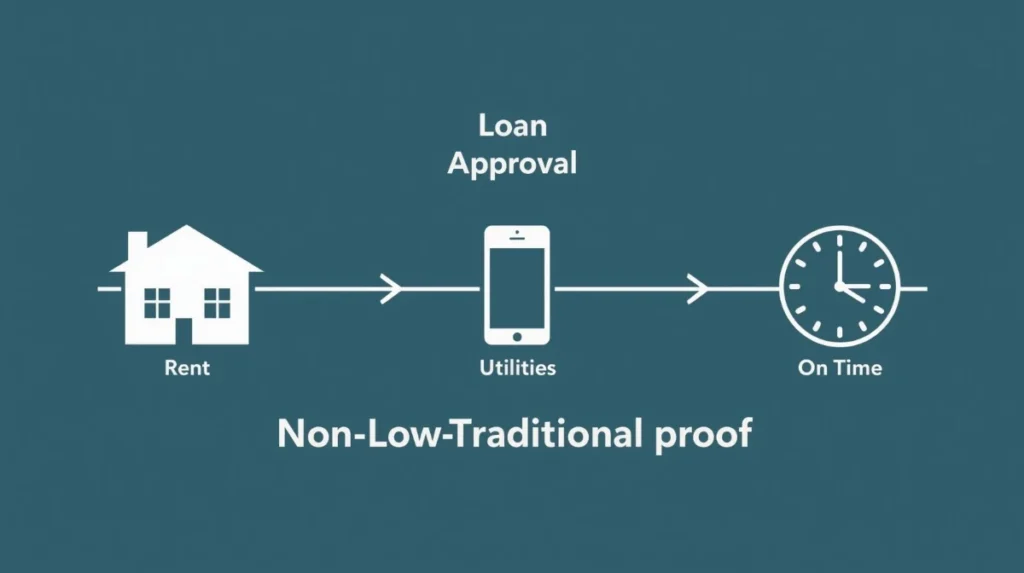
- Utility and Telecom Bills: Collect 12 months of on-time payment records for your mobile phone bill, electricity, and gas. Some lenders use specialized software to verify these payments.
- Rent Payment History: If you rent, ask your landlord for a letter or receipts confirming 12-24 months of consistent, on-time rent payments. Some third-party services can also report rent payments to credit bureaus, retroactively building your file.
- Educational Credentials: For recent graduates, educational attainment and job prospects can be considered as forward-looking proof of income potential.
III. Phase 2: Finding Non-Traditional Loan Options
You must avoid large commercial banks initially and focus on institutions specifically designed to work with borrowers who have limited credit history.
C. Secured Personal Loans (Collateral is Key)
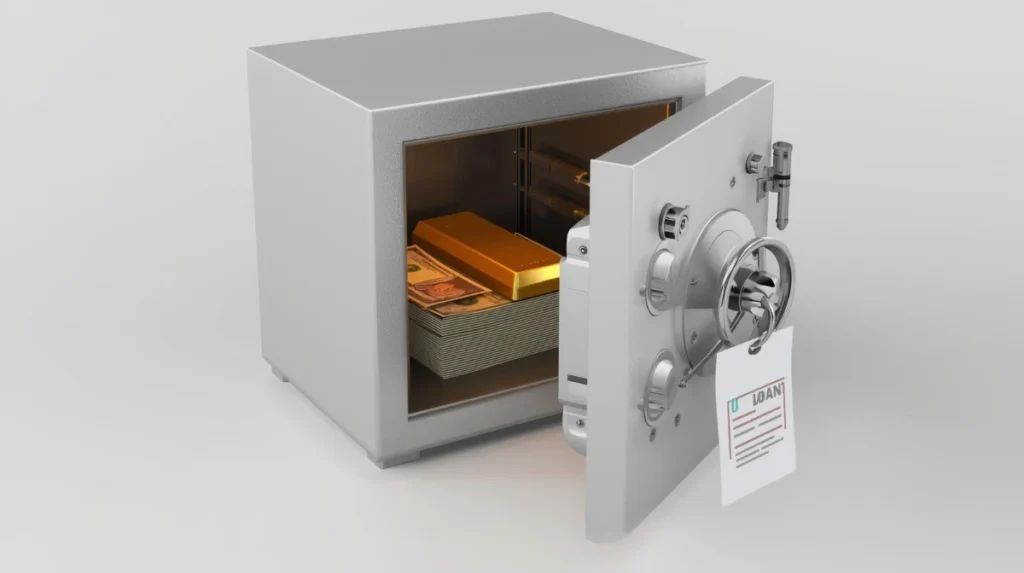
A Secured Personal Loan uses an asset as collateral, significantly reducing the lender’s risk and making them more willing to approve applicants with no score.
- Gold Loans: (Highly relevant in India) Using gold jewelry as collateral. This is quick, has high approval odds, and requires minimal credit check.
- Loan Against Fixed Deposit (FD): Using your own Fixed Deposit or Savings Certificate as collateral. The loan amount is typically 80% to 90% of the FD value. Since the bank holds your asset, the credit score is almost irrelevant.
- Car Title Loan: Using your vehicle as collateral (if it is paid off). While a viable option, ensure you understand the risk of losing the asset if you default.
D. Credit Unions and Community Banks
These smaller institutions often take a more “human” approach to underwriting.
- Relationship Lending: They prioritize their relationship with members. If you open a checking/savings account and manage it responsibly for six months, they may be more inclined to approve a small personal loan based on that banking history.
- Credit Builder Loans: These are loans designed specifically for people with no credit. The loan amount is deposited into a locked savings account (a CD). You make payments on the loan over 6-12 months, and once paid off, you receive the lump sum, and the timely payments are reported to the credit bureau.
E. Co-signer Loans
If you have a financially strong friend or relative with excellent credit, asking them to co-sign the loan can dramatically improve your chances of approval.
- The Risk: The co-signer is equally and legally responsible for the debt. If you miss a payment, the co-signer’s credit score suffers. Use this option only if you are absolutely certain you can meet the repayment schedule.
IV. Phase 3: Applying and Building the Future Score
Once you secure your first loan, the focus immediately shifts to using it as a tool to build a strong credit foundation.
F. The Application Strategy
- Apply to Only One Lender: Avoid applying to multiple lenders simultaneously. Each application results in a Hard Inquiry, which can temporarily hurt your credit score when you do finally establish one.
- Be Transparent: Clearly state in your application or to the loan officer that your credit file is “thin” and proactively offer your alternative payment documents (rent receipts, utility bills).
G. The Repayment Habit (The Path to a High Score)
Your only goal with this first loan is to establish a perfect Payment History.
- Automate Payments: Set up automatic monthly payments from your bank account to ensure you never miss a deadline. Payment history accounts for the largest portion of your future credit score.
- Avoid Early Closure: Pay the loan off according to the original schedule. If you pay it off too quickly, the credit bureau may not have enough time to record the full history of positive payments.
Conclusion
Securing a personal loan without a credit score requires diligence, strategic preparation, and a willingness to use non-traditional lending routes like secured loans or co-signers. By leveraging your stable income and proven payment history (rent and utilities), you build the Trust that replaces the Score. Use this first loan responsibly—pay it perfectly and on time—and it will quickly become the foundation for a strong credit file, opening doors to better financial products in the future.
READ MORE – How to Apply for an Education Loan Online — Step by Step Guide
❓ Frequently Asked Questions (FAQ)
Q1. What is a “Hard Inquiry” and why should I avoid them?
A. A Hard Inquiry is a credit check performed by a lender when you apply for credit (like a personal loan or credit card). It signals to the credit bureau that you are actively seeking credit. Too many Hard Inquiries in a short period suggest financial desperation and can temporarily lower your credit score by a few points.
Q2. Is a “No Score” the same as a “Bad Score”?
A. No, they are different. A “Bad Score” (e.g., below 600) means you have a history of missed payments and defaults. A “No Score” means you simply lack sufficient recent credit activity for the bureau to generate a score. While both lead to initial loan difficulty, a “No Score” is easier to fix with a few months of responsible borrowing.
Q3. Can I use my utility bills to build a credit score?
A. Traditionally, utility bills and rent payments were not reported to credit bureaus. However, this is changing. Specialized third-party services (like Experian Boost or similar local services) now allow you to consent to report your on-time utility and rent payments, which can help quickly build or boost a thin credit file.
Q4. What is a good starter loan amount when I have no credit?
A. Start small. Requesting a loan for ₹50,000 to ₹1,00,000 over a 12-month term is often sufficient to show a lender you are serious about repayment without presenting excessive risk. Successfully paying off a small loan builds trust faster than defaulting on a large one.