

When you apply for a secured loan—such as a home mortgage, a gold loan, or a loan against property—the lender’s primary risk assessment tool is not just your credit score; it is the Loan-to-Value (LTV) Ratio. This ratio is the fundamental metric that determines how much money the bank is willing to lend you against the value of your collateral asset.
The LTV ratio is critical because it represents the safety buffer the lender has against default. A higher LTV means higher risk for the bank, which usually translates into a higher interest rate for you. A lower LTV means less risk for the bank and better terms for the borrower.
Understanding how to calculate and optimize your LTV ratio is the key to negotiating favorable terms, qualifying for lower interest rates, and planning your secured borrowing strategy effectively. This comprehensive guide will break down the LTV calculation, explain its direct impact on your loan terms, and provide actionable tips for achieving the best possible ratio as a beginner.
I. Defining the Loan-to-Value (LTV) Ratio
A. The Simple Calculation
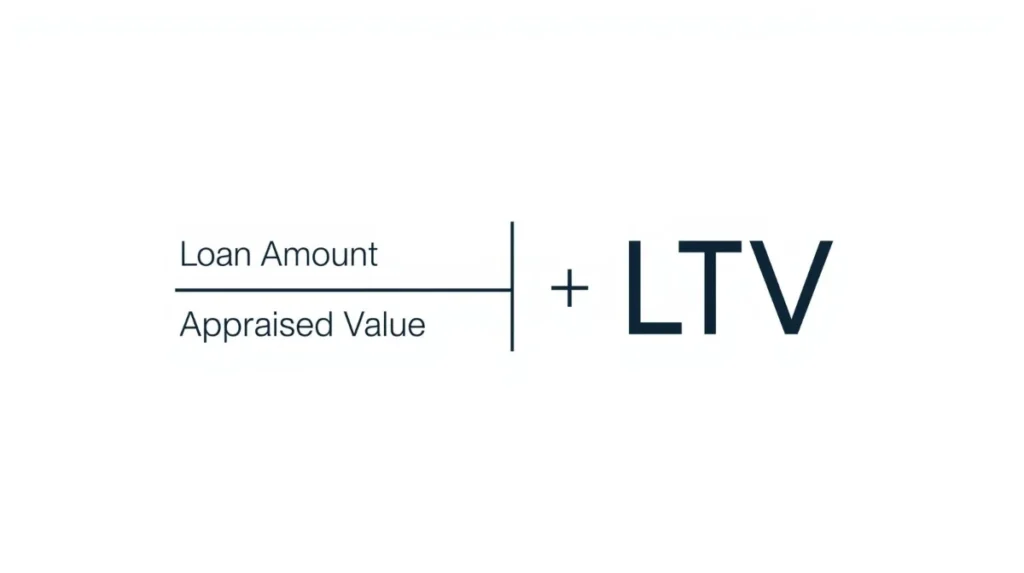
The LTV ratio is a percentage derived by dividing the amount you are borrowing by the market value of the asset you are offering as security (collateral).
The formula is:
LTV Ratio = (Loan Amount / Asset’s Appraised Value) x 100
- Example: If you are buying a home appraised at ₹50,00,000 and you need to borrow ₹40,00,000, the LTV ratio is calculated as follows:(₹40,00,000 / ₹50,00,000) x 100 = 80%
B. The Lender’s Safety Buffer (Equity)
The LTV ratio directly reflects the borrower’s equity in the asset. The remaining percentage (100% minus LTV) is the cushion the bank has.
- In the 80% LTV example, the bank has a 20% cushion. If you default, the bank can seize and sell the property, and even if property values drop by 15%, the bank can still recover its principal loan amount. This cushion is why banks rarely allow an LTV exceeding 90% for standard loans.
II. Phase 1: LTV Impact Across Different Secured Loans
The acceptable LTV ratio varies significantly depending on the volatility and liquidity of the collateral asset.
C. LTV for Mortgages (Home Loans)
Mortgages are the most common LTV application. Since property values are relatively stable (though slow to liquidate), banks set high LTV limits.
- Standard Limit: 75% to 90% LTV.
- Borrower Implication: A higher LTV (e.g., 90%) means a smaller down payment (only 10% cash required), but often requires the borrower to pay for Private Mortgage Insurance (PMI), which protects the lender, not the borrower.
D. LTV for Gold Loans (Gold/Jewelry)
Gold is highly liquid and easily valued, but its price is volatile.
- Standard Limit: 60% to 75% LTV.
- Borrower Implication: Because gold prices fluctuate daily, the bank maintains a larger safety buffer (a lower LTV). If the gold price drops, the bank may issue a Margin Call, requiring the borrower to provide additional collateral or pay down part of the loan principal.
E. LTV for Loan Against Property (LAP)
When using an already owned property as collateral for a cash loan.
- Standard Limit: 50% to 70% LTV.
- Borrower Implication: Since the borrower is taking cash out of an existing asset, the bank is more cautious, imposing a lower LTV limit to ensure maximum security.
III. Phase 2: The Direct Relationship Between LTV and Loan Terms
The LTV ratio is not just an eligibility hurdle; it is a direct determinant of the loan’s cost.
F. Interest Rate and Risk Correlation
The lower your LTV, the lower the perceived risk for the bank, which translates directly into cost savings for you.
- Low LTV (e.g., 70%): You will qualify for the bank’s most competitive, lowest interest rates because the bank knows it is highly unlikely to lose money if you default.
- High LTV (e.g., 90%): You will pay higher interest rates, as the bank must be compensated for taking on the additional risk due to the thin equity cushion.
G. Insurance Requirement (PMI/MIP)
On mortgages, if your LTV exceeds 80% (meaning you put less than 20% down), the lender will almost certainly require you to pay for mortgage insurance (like PMI in the US).
- The Cost: This insurance adds a significant extra monthly payment to your budget, often until your LTV naturally drops below the 80% threshold through consistent principal payments.
H. Influence on Loan Approval
For marginal applicants, a low LTV can overcome deficiencies in other areas.
- Low Score/High LTV: A weak application.
- Low Score/Low LTV (e.g., 60%): The bank may approve the loan because the low risk of the collateral outweighs the borrower’s weaker credit history. LTV acts as a compensating factor.
IV. Phase 3: Optimizing Your LTV Ratio for the Best Terms
As a borrower, your goal should be to present the lowest LTV ratio possible.
I. Increasing the Down Payment
The most direct and effective way to lower the LTV is to increase the amount of cash you bring to the transaction.
- Strategy: Aim for a down payment that takes your LTV well below the 80% threshold. If the purchase price is ₹1 Crore, aiming for a ₹25 lakh down payment (75% LTV) is better than a ₹15 lakh down payment (85% LTV). The interest savings will quickly offset the initial higher cash outlay.
J. Challenging the Appraisal Value
The LTV calculation depends entirely on the Asset’s Appraised Value. This value is subjective and can be challenged.
- Action: If the bank’s appraiser values your property lower than the sale price, provide the lender with comparable sales data (comps) from the local market that justify a higher valuation. A higher appraised value reduces the LTV without you having to increase your down payment.
K. Paying Down Existing Principal
If you are applying for a refinance or a loan against an existing asset, paying down a lump sum of the existing loan principal before the application date will instantly lower the numerator (Loan Amount) in the LTV formula, making your application stronger.
Conclusion
The Loan-to-Value ratio is the language of secured borrowing. It is the single most important metric indicating the health of a collateralized debt. By proactively calculating your LTV, aggressively increasing your down payment, and aiming for a ratio below 80% for mortgages and below 75% for volatile assets like gold, you not only improve your chances of approval but secure the lowest available interest rates. Mastery of the LTV ratio transforms you from a passive applicant into an informed financial negotiator.
READ MORE – Setting Up Shared Finances: Choosing the Best Joint Bank Account for Non-Married Partners
❓ Frequently Asked Questions (FAQ)
Q1. What is the lowest LTV ratio a lender will accept?
A. Lenders will accept any LTV ratio, including ratios as low as 0% (if you pay for the entire property in cash). The lower the LTV, the happier the bank is, as the risk is minimal. However, most people borrow because they need funds, so the optimal LTV for the borrower is one that is low enough to secure the best rate (e.g., 70-75%).
Q2. Does LTV change after I get the loan?
A. Yes, the LTV changes over time, although the bank uses the initial LTV to set the terms. As you pay down the loan principal, the numerator (Loan Amount) decreases. Simultaneously, if the value of your asset (the denominator) increases (e.g., property appreciation), your LTV decreases, increasing your home equity.
Q3. Is a high LTV bad for the borrower?
A. A high LTV (e.g., 90%+) is generally bad because it signals higher risk to the lender. It results in a higher interest rate, higher monthly payments, and often forces the borrower to pay for Private Mortgage Insurance (PMI), increasing the total cost of the loan significantly.
Q4. What is a “Margin Call” in the context of Gold Loans?
A. A Margin Call occurs when the value of the collateral asset (like gold) drops significantly, causing your LTV to exceed the bank’s maximum allowable threshold (e.g., 85%). To restore the bank’s safety cushion, the borrower is required to either provide additional collateral or immediately pay down a portion of the loan principal.