
Introduction: The Illusion of “Free”
Open YouTube or Instagram, and you will see an ad: “Open a Free Demat Account! Zero Brokerage on Delivery!”
It sounds like a dream. You sign up, buy 10 shares of Tata Motors, and sell them a week later for a small profit. You feel smart. You think you paid nothing to the broker.
Check your ledger again.
If you look closely at your contract note, you will see money missing.
“But the ad said Zero Brokerage!” you scream.
Yes, the Brokerage is zero. But the DP Charges, STT, Exchange Transaction Charges, SEBI Turnover Fees, and GST are definitely not zero. In fact, for small traders, these “hidden” regulatory costs can sometimes eat up 50% to 100% of your profit.
Even scarier? Do you know where your shares actually are? Are they with the app on your phone, or are they floating in a “Pool Account”?
In this investigative guide, we will rip apart the “Zero Brokerage” marketing gimmick. We will expose the 7 Hidden Charges in Indian Demat accounts and answer the terrifying question: If my broker goes bankrupt (like Karvy), do I lose my shares?
I. The “DP Charge”: The Silent Killer of Small Profits
This is the #1 charge that beginners don’t know about.
What is it?
When you buy a share, it comes into your Demat account. When you SELL that share, it has to leave your account.
The Depository (CDSL or NSDL) charges a fee for this “exit.” The broker adds their own commission to it.
- The Cost: Typically ₹13.50 + 18% GST = Approx ₹16 per company, per day.
The “Penny Stock” Trap
This charge is fixed, regardless of the value.
- Scenario: You buy 1 share of Vodafone Idea for ₹10.
- Price rises: It goes to ₹12. You sell it to book a ₹2 profit.
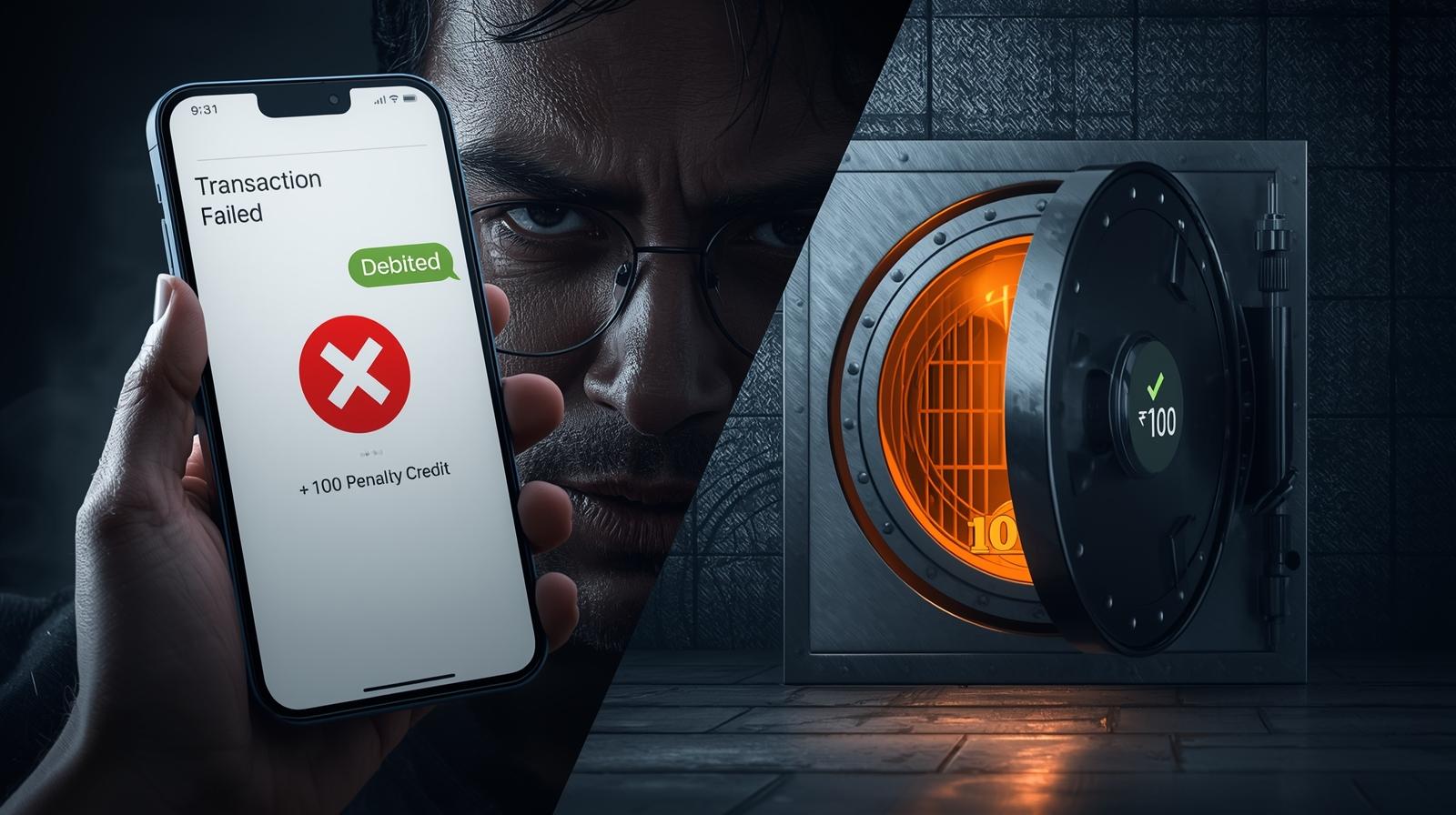
- The Shock:
- Profit: ₹2
- DP Charge: -₹16
- Net Loss: -₹14
- The Reality: You actually lost money on a profitable trade because of the DP charge.
Expert Rule: Never sell small quantities (1 or 2 shares) frequently. The DP charge applies per company sold that day. If you sell 100 shares of Tata Motors, you pay ₹16 once. If you sell 1 share, you still pay ₹16. Accumulate and sell in bulk.
II. The 6 Other Hidden Charges (The “Tax” Avalanche)
Brokerage is just the tip of the iceberg. Here is the rest of the mountain.
1. STT (Securities Transaction Tax)
- The Cost: 0.1% on Buy & Sell (Delivery).
- Impact: If you trade ₹1 Lakh, the government takes ₹100 instantly. You can’t avoid this.
2. Exchange Transaction Charges
- The Cost: Approx 0.00345% (NSE/BSE fee).
- Impact: Small, but it adds up on high volume.
3. SEBI Turnover Fee
- The Cost: ₹10 per Crore.
- Impact: Negligible for beginners, but it exists.
4. Stamp Duty
- The Cost: 0.015% (Buy side only).
- Impact: State-level tax on the contract note.
5. Auto-Square Off Charges (The Penalty)
This is a broker penalty. If you do Intraday trading (MIS) and forget to close your position by 3:15 PM or 3:20 PM, the broker’s computer closes it for you.
- The Cost: ₹50 per order + GST.
- The Lesson: Always close your own intraday trades manually.
6. Call & Trade Charges
If your internet fails and you call customer support to place an order for you.
- The Cost: ₹50 per order.
III. AMC: The “Rent” for Your Account
Even if you don’t trade a single share for a year, you might still get a bill. This is the Account Maintenance Charge (AMC).
- Traditional Brokers (ICICI Direct, HDFC Sec): High AMC (₹700 – ₹900 per year).
- Discount Brokers (Zerodha, Upstox): Low AMC (₹300 per year).
- Zero AMC Brokers (Groww, Dhan): Many new apps offer Lifetime Free AMC to attract youth.
The BSDA Rule (Good News):
If your total holding value is less than ₹50,000, the broker cannot charge any AMC (Basic Services Demat Account rule by SEBI). If they charge you, complain immediately.
IV. The Safety Question: “Is My Money Safe?” (The Karvy Scandal)
After the Karvy Stock Broking scandal (where the broker misused client shares), investors are terrified. What if Zerodha or Groww shuts down tomorrow?
The “Pool Account” vs. “Your Demat”
- The Broker’s Job: The broker (app) is just a messenger. They take your order and pass it to the exchange.
- The Vault (CDSL/NSDL): Your shares are NOT kept with the broker. They are stored digitally in a central vault managed by CDSL (Central Depository Services Ltd) or NSDL.
How to Check Ownership?
Don’t trust the app screen.
- Go to the CDSL Easiest or NSDL Speed-e website.
- Register using your DP ID (found in your broker profile).
- Check if the shares are visible there.
- The Verdict: If the shares are in your CDSL/NSDL account, the broker can go bankrupt, burn down, or run away—your shares are 100% safe. You can simply link them to a new broker.
The Risk: PoA (Power of Attorney)
When you open an account, you give the broker a “Power of Attorney” (PoA) or “DDPI”. This allows them to debit shares when you sell.
- Safety Tip: Newer apps use CDSL T-PIN verification. This is safer. It means you authorize every single sale with a PIN and OTP. Always prefer T-PIN over giving a blanket PoA.
V. Action Plan: How to Audit Your Broker
Stop bleeding money today. Follow this 10-minute audit.
Step 1: Download the “Tax P&L” or “Ledger”
Don’t just look at the dashboard. Download the full Tax P&L report for the last year.
Step 2: Calculate the “Real” Expense Ratio
- Total Profit = X
- Total Charges & Taxes = Y
- The Formula: (Y / X) * 100.
- If your charges are more than 20% of your profit, you are over-trading or trading with too little capital.
Step 3: Check for “Pledge” Misuse
If you haven’t pledged your shares for margin, ensure your statement doesn’t show any “Pledged Balance.” If it does, contact compliance immediately.
Conclusion: There is No Free Lunch
“Zero Brokerage” is a marketing term, not a financial reality. While discount brokers have revolutionized investing by removing the massive % commissions of the past, the regulatory costs (STT, GST, DP Charges) remain.
Smart investing isn’t just about picking the right stock; it’s about executing the trade efficiently.
- Avoid selling tiny quantities (to save DP charges).
- Use Limit Orders (to control price).
- Check your CDSL statement monthly (for safety).
The market is risky enough; don’t let hidden fees add to that risk.
READ MORE – Personal Loan Balance Transfer: How to Reduce Interest Rate from 16% to 11%
⚠️ Disclaimer
Financial Disclaimer: This article is for educational purposes only. ZunoMoney is not a registered investment advisor. The charges mentioned (DP, AMC, STT) are subject to change by SEBI, CDSL, or the respective brokers. We do not endorse any specific stock broker. Please read the “Risk Disclosure Document” carefully before trading.
❓ Frequently Asked Questions (FAQ)
Q1. Which broker has the lowest DP charges in India?
A. Most discount brokers (Zerodha, Upstox, Angel One) have standard DP charges around ₹13.5 + GST. However, some newer “Zero Brokerage” apps like Finvasia (Shoonya) or Kotak Neo (under specific plans) claim to absorb some costs, but always read the fine print.
Q2. Is my money in the “Trading Wallet” safe?
A. No. The funds lying in your broker’s wallet (unused funds) are safer than before due to new SEBI rules on “Quarterly Settlement” (where brokers must send back unused money every 90 days), but they are still with the broker. Best Practice: Keep money in your Bank Account and transfer it only when you want to buy. Don’t leave lakhs idle in the trading app.
Q3. Why did I get a negative balance notification?
A. This usually happens due to AMC (Annual Maintenance Charges). If you have zero cash in your trading account, the broker deducts the yearly AMC, pushing your balance into negative. If you don’t pay it, they might sell some of your shares to recover the fee.
Q4. Can I transfer my shares from Zerodha to Groww (or vice versa)?
A. Yes. You can do an “Off-Market Transfer” using CDSL Easiest or by submitting a DIS (Delivery Instruction Slip) to your old broker. You do not need to sell your shares and buy them again (which would trigger tax).



3 thoughts on “The “Zero Brokerage” Lie: 7 Hidden Demat Charges & Safety Risks”