

In the digital age, money moves constantly. But when you initiate a transfer—whether paying a freelancer, sending money to family, or depositing your paycheck—it travels along one of two primary invisible “rails” in the banking system: the Automated Clearing House (ACH) network or the Wire Transfer network.
While both methods move money from one bank account to another, they differ vastly in speed, cost, security, and usage. For individuals and small business owners, understanding the fundamental distinction between an ACH transfer and a Wire Transfer is crucial for choosing the most cost-effective and timely method for your specific financial needs.
This comprehensive guide breaks down the core differences, explains when to use each method, and highlights why one can take days while the other is nearly instantaneous.
I. The Automated Clearing House (ACH) Network: The Batch System
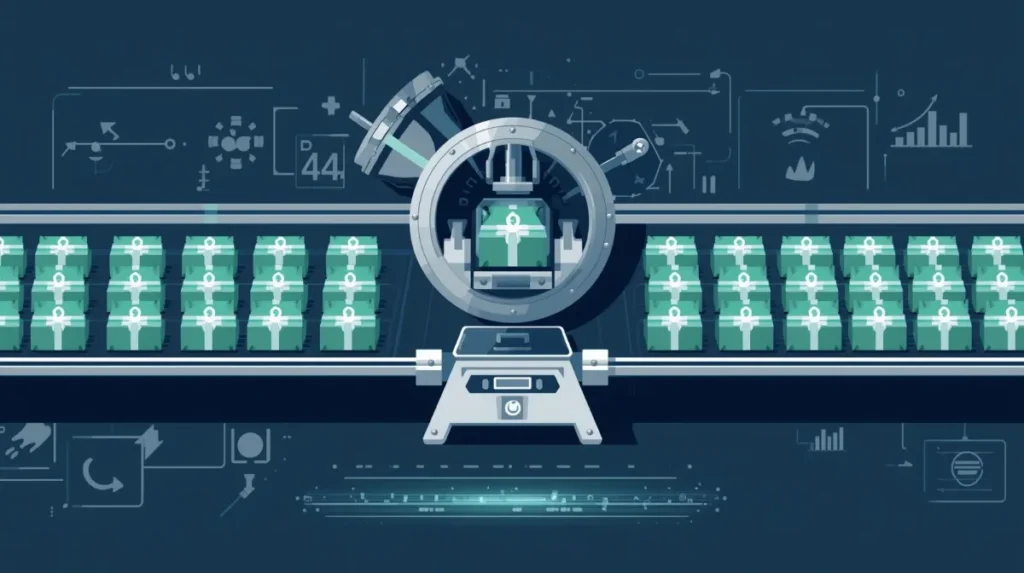
The ACH network is an electronic funds-transfer system primarily used for processing large volumes of low-value, non-urgent transactions. It is managed by a central body (in the US, this is Nacha). Think of ACH as the “bulk mail” system of the banking world.
A. Key Characteristics of ACH Transfers
- Batch Processing: ACH transactions are not processed individually in real-time. Banks collect payments throughout the day and send them to the ACH network in batches at scheduled times (typically three to four times per day).
- Low Cost: Due to the bulk processing, ACH transfers are highly cost-effective. Many banks offer them for free for consumers (e.g., direct deposit, paying bills) or charge a very low fee for outgoing transfers (e.g., ₹50 to ₹150).
- Speed (Slow but Predictable): Transfers are not immediate. They typically take 1 to 3 business days to complete, as the funds must clear the batch processing system.
- Reversibility: A significant advantage for consumers is that ACH payments are relatively easy to reverse if a mistake is made or if a fraudulent transaction occurs.
B. Common Uses for ACH Transfers
- Direct Deposit: Your salary/paycheck is sent via ACH.
- Automatic Bill Payments: Utility bills, insurance premiums, and mortgage payments are typically debited via ACH.
- P2P Apps: Many peer-to-peer payment services (like Venmo or basic bank-to-bank transfers) use the ACH network.
- E-Checks: Electronic checks use the ACH system.
II. Wire Transfer: The Real-Time System

Wire transfers are electronic methods that move money directly and immediately from one financial institution to another through a highly secured, instantaneous network (like the Fedwire system in the US or RTGS in India). Think of a Wire Transfer as the “express courier service.”
C. Key Characteristics of Wire Transfers
- Individual Processing: Wire transfers are processed in real-time and individually, not in batches. Once sent, the funds are debited from the sender’s account immediately and are generally available to the recipient within minutes or a few hours.
- High Cost: Because of the immediate speed, security, and individualized processing, Wire Transfers are significantly more expensive. Fees can range from ₹500 to ₹3,000 or more per transfer, especially for international wires.
- Speed (Immediate): They are typically the fastest way to move money, often completing within the same business day, if not minutes.
- Irreversibility: Once a Wire Transfer is initiated and received, it is extremely difficult, if not impossible, to reverse.14 This high finality makes them a popular target for scams.
D. Common Uses for Wire Transfers
- Real Estate Closings: Used to fund the purchase of a house, as immediate availability of funds is required.
- High-Value Transactions: Used for large, time-sensitive payments, such as business deals or large international trade settlements.
- International Transfers: Although often expensive, they are a traditional method for sending money across borders quickly.
III. Side-by-Side Comparison: ACH vs. Wire
The fundamental difference boils down to cost, speed, and finality.
| Feature | ACH Transfer | Wire Transfer |
| Speed | 1 to 3 Business Days | Same Day/Within Minutes |
| Cost | Low or Free (Domestic) | High (₹500 – ₹3,000+) |
| Processing | Batch (Scheduled Intervals) | Real-Time (Individual) |
| Finality/Reversibility | Reversible (Easier to dispute errors) | Irreversible (Difficult to recover funds) |
| Best For | Bill payments, Payroll, Low-cost recurring transactions. | Time-sensitive, high-value, and non-reversible transactions. |
IV. When to Choose Which Transfer Method
E. Choose ACH When:
- You prioritize cost savings. You need to send money regularly and the fee (or lack thereof) is a primary concern.
- The payment is recurring and routine (e.g., rent, gym membership, monthly investment contributions).
- Timing is not critical. The recipient can wait a day or two for the funds to clear.
- You need security against mistakes. The ability to easily reverse an error provides peace of mind.
F. Choose Wire Transfer When:
- Time is of the essence. The payment is urgent and must be received within the hour (e.g., closing a business deal).
- The transaction is high-value (e.g., funding a large investment or real estate purchase).
- The recipient requires immediate and final clearance. The payment must be guaranteed and non-reversible upon receipt.
Conclusion
Do not pay a premium for speed you don’t need. For 90% of a consumer’s financial life—bill payments, payroll, and routine transfers—the low-cost, predictable ACH network is the superior choice. Reserve the expensive, immediate, and irreversible Wire Transfer for critical, high-stakes transactions where speed and finality are non-negotiable. By making an informed choice between these two invisible rails, you can optimize your time and money with every transaction.
READ MORE – The Unofficial Guide to Zero-Fee Banking: How to Avoid Every Hidden Charge in Your Savings Account
❓ Frequently Asked Questions (FAQ)
Q1. Are all same-day transfers considered Wire Transfers?
A. Not always. While Wire Transfers are always same-day, the ACH network also offers a Same-Day ACH option. However, Same-Day ACH is still processed in batches (just more frequent batches) and is often subject to lower dollar limits and a slightly higher fee than standard ACH. A true Wire Transfer remains the fastest and most final method.
Q2. Is UPI or IMPS in India the same as an ACH or Wire Transfer?
A. UPI (Unified Payments Interface) and IMPS (Immediate Payment Service) are similar to real-time payment networks (like FedNow or RTP in the US), but they share characteristics with both ACH and Wire.17 They are instant and low-cost (like ACH) but final and real-time (like a Wire). For the purposes of international comparison, the closest traditional equivalent to UPI/IMPS is the high speed of a Wire combined with the low cost of an ACH.
Q3. Is it safe to provide my routing and account number for an ACH transfer?
A. Yes, it is generally safe. Your bank routing number and account number are printed on every check you write and are necessary to facilitate legitimate transfers (like direct deposit or bill pay). However, you should only provide this information to trusted and verified entities to minimize the risk of fraudulent ACH debits.






2 thoughts on “ACH vs. Wire Transfer: A Beginner’s Guide to When Speed and Cost Matter Most”