

You diligently save your money, aiming for financial stability and growth, only to find small, persistent charges chipping away at your hard-earned interest. These are the hidden bank fees—the stealth tax on your savings account. While major fees are advertised, many smaller, situational charges can deplete your balance and cause unnecessary frustration.
For beginners and experienced savers alike, navigating the complex fee schedules of modern banking institutions can feel like walking through a minefield. The goal of zero-fee banking is simple: ensure that every rupee you save is working for you, not for the bank.
This comprehensive guide breaks down the most common hidden fees associated with savings accounts and provides actionable, step-by-step strategies to eliminate them, ensuring your financial goals remain on track.
I. Understanding the Most Common Savings Account Fees
Before you can avoid a fee, you must know what it is. Savings account fees generally fall into three categories: maintenance, transaction, and penalty fees.
A. Maintenance and Service Fees (The Cost of Having an Account)
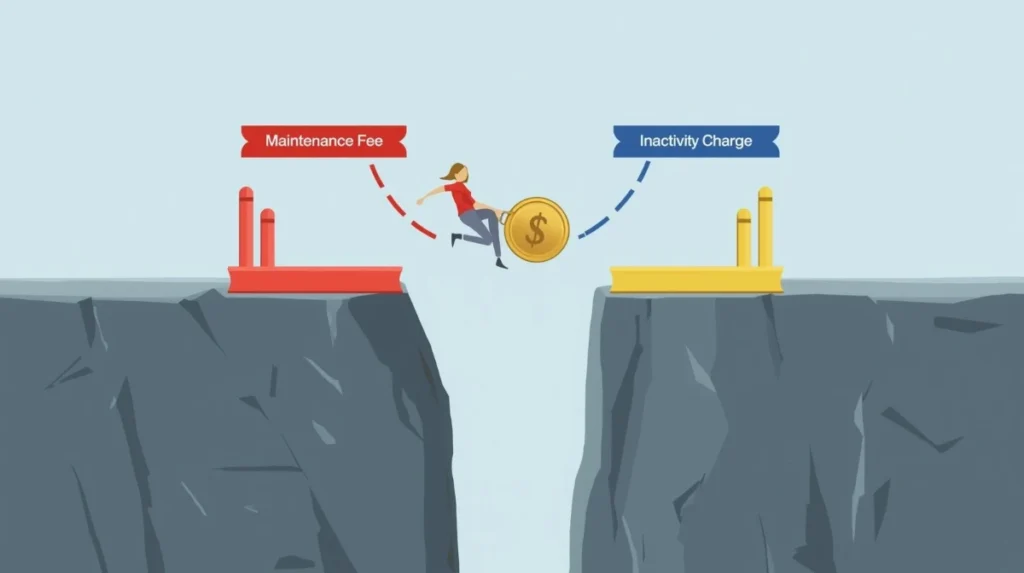
These are the recurring charges you pay just for keeping your account open. They are the easiest to avoid if you understand the rules.
- Monthly Maintenance Fee: A fixed fee charged every month. It is usually the most common fee.
- Low Balance Fee: Charged when your account balance dips below a minimum threshold set by the bank. This is often disguised as a “Maintenance Fee.”
- Inactivity Fee: Charged when there is no activity (deposits or withdrawals) in your account for an extended period, typically 12 to 24 months.
B. Transaction and Withdrawal Fees (The Cost of Moving Your Money)
These fees are often tied to regulatory limits or the nature of the transaction.
- Excess Withdrawal Fee (Regulation D Limit): Although Regulation D (in the US) was suspended, some banks still enforce limits on the number of convenient withdrawals (transfers, online transfers, checks) you can make from a savings account, often limiting them to six per month. Going over this limit incurs a hefty fee per transaction.
- Inter-Bank Transfer Fees: Charged for electronic transfers (ACH or Wire) initiated from your savings account to another bank’s account.
C. Penalty and Administrative Fees
These are situational charges related to paperwork or failure to follow procedures.
- Account Closure Fee: A fee charged if you close your savings account shortly after opening it (e.g., within 90 or 180 days).
- Paper Statement Fee: Charged if you opt to receive paper statements instead of utilizing electronic (e-statement) delivery.
- Stop Payment Fee: Charged when you request the bank to cancel a check or pre-authorized payment linked to your savings account.
II. Phase 1: Strategic Account Selection (Zero-Fee Foundation)
The best defense against hidden fees is choosing the right account from the start.
A. Prioritize Online-Only Banks and Credit Unions
Traditional brick-and-mortar banks often have higher overhead costs, which they pass on to customers through fees.
- Online Banks: They typically offer higher interest rates and almost always feature zero monthly maintenance fees and no minimum balance requirements because of their lower operating costs.
- Credit Unions: As non-profit institutions, they are member-owned and generally prioritize lower fees and better customer service than large commercial banks.
B. The Minimum Balance Myth vs. Reality
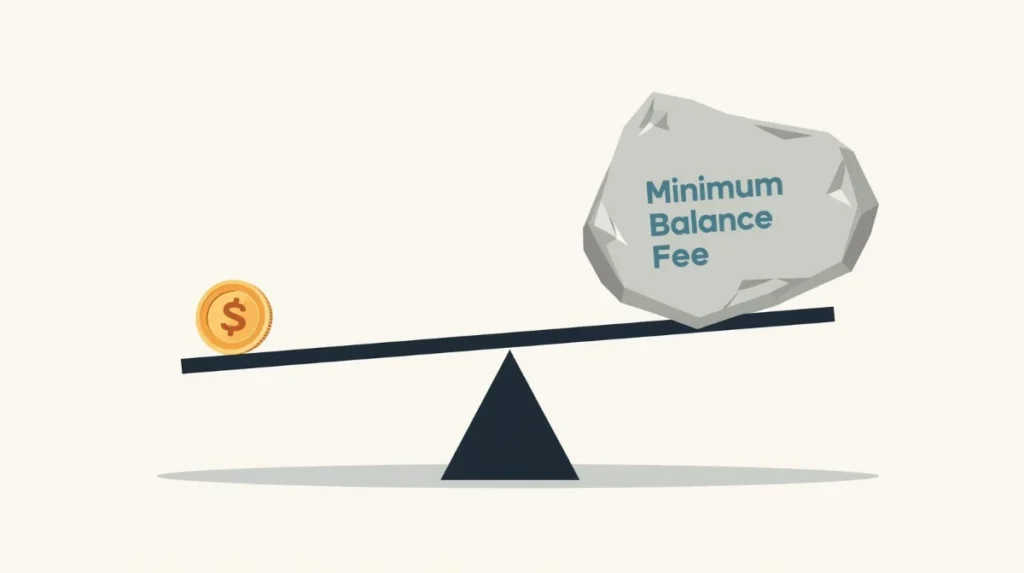
Never choose a bank simply because it offers a “high interest rate” if that rate is tied to an unreasonable minimum balance.
- Action: If a bank requires a ₹25,000 minimum balance to waive a ₹500 fee, ask yourself: Can I guarantee that balance? If a market fluctuation or unexpected expense forces you to drop below that line, the fee will instantly negate your interest earnings. Opt for an account with a ₹0 minimum balance requirement.
C. Reading the Fine Print: The Fee Schedule
Before signing any agreement, ask for the comprehensive Fee Schedule. This document legally lists every possible charge.
- Look For: Scrutinize the fine print regarding “Excess Withdrawal Fees,” “Inactivity Fees,” and the specific conditions for waiving the monthly service charge.
III. Phase 2: Tactical Transaction Management
Once the account is opened, disciplined transaction management is essential to avoid situational charges.
D. Mastering the Monthly Withdrawal Limits
Even if Regulation D has been suspended for the time being, many banks voluntarily retain the six-withdrawal limit to discourage you from using the savings account like a checking account.
- The Strategy: Link your savings account only to your checking account. When you need money from savings, make one single monthly transfer into your checking account, and then spend from checking. Do not initiate multiple direct payments or debit card transactions from savings.
- The Penalty: If you exceed the limit, the bank can charge a penalty fee (often ₹500 to ₹1000 per transaction) and may even convert your savings account to a checking account, losing you the higher interest rate.
E. Eliminating Paper and Automated Fees
Most administrative fees are easily avoidable with simple digital habits.
- Go Digital: Immediately opt-out of paper statements. Set up all alerts via email or mobile app. This eliminates paper statement fees and reduces the chance of missing important fee notices.
- Consolidate: If you have multiple small savings accounts at various institutions, consolidate them into one or two strategic, high-interest accounts. This makes tracking minimum balance requirements much simpler.
- Maintain Activity: If you have a separate savings account you rarely use (like a Sinking Fund for a distant goal), set up a small, automated monthly transfer (even ₹10) into it to prevent it from being flagged as “inactive.”
IV. Phase 3: Dealing with Account Maintenance and Closure
Even when you follow the rules, maintenance issues can arise.
F. Monitoring and Appealing Fees
Banks rely on you not noticing small fees. Make it a habit to check your savings account statement for hidden charges at least quarterly.
- The Appeal: If you are charged a fee due to an honest mistake or a marginal miss of the minimum balance, call the bank immediately. Politely explain the situation and ask for a one-time courtesy refund. Banks often grant this to reliable, long-term customers.
G. Closing an Account Without Penalty
If a bank introduces new fees you cannot avoid, or if your financial situation changes, you may need to close the account.
- The Time Limit: Check the original agreement for the Account Closure Fee window (usually 90 or 180 days). Wait until this period passes.
- The Zero Balance: Ensure the account balance is exactly zero (or transferred entirely) when you initiate the closure. Leaving a few rupees behind can cause the account to remain open and potentially incur inactivity fees later.
Conclusion
Achieving zero-fee banking is entirely within your control. It requires a foundational understanding of the bank’s fee schedule (the ‘fine print’) and disciplined transaction management (avoiding excess withdrawals and opting for digital statements). By strategically choosing online or zero-minimum balance accounts and treating your savings account as a strategic storage unit—not a daily transaction hub—you ensure that your savings grow unimpeded by the silent erosion of hidden charges. Take control today and demand that your money works exclusively for your financial future.
READ MORE – Mastering Sinking Funds: Your Step-by-Step Guide to Saving for Big Expenses
❓ Frequently Asked Questions (FAQ)
Q1. Is it true that I should not link my savings account to my debit card?
A. Yes, generally this is true. Linking your debit card directly to your savings account encourages impulsive spending and increases the risk of exceeding the monthly withdrawal limit, leading to excess withdrawal fees. Always link your debit card only to your checking account.
Q2. Does my bank count internal transfers (savings to checking) as withdrawals?
A. Yes, in the context of the regulatory or voluntary monthly limit, most banks count transfers initiated online or over the phone (even to your own linked checking account) as one of the limited “convenient” withdrawals. Always minimize these monthly transfers.
Q3. What is the difference between a minimum balance fee and an overdraft fee?
A.
Minimum Balance Fee: A service fee charged when your account balance falls below a required average balance threshold (e.g., must keep ₹10,000 to avoid the fee).
Overdraft Fee: A penalty charged when you spend more money than is available in your account, driving the balance negative. Overdraft fees are typically associated with checking accounts, though they can sometimes happen if your savings account is used for overdraft protection.
Q4. Should I switch banks just to avoid a fee?
A. Yes, if the fees are recurring (like a monthly maintenance fee) and you cannot easily meet the waiver requirements. Over a year, small recurring fees can easily negate all the interest you earn. Switching to a zero-fee online bank or credit union is often the most straightforward and financially beneficial long-term solution.







2 thoughts on “The Unofficial Guide to Zero-Fee Banking: How to Avoid Every Hidden Charge in Your Savings Account”