

We’ve all been there. You open your banking app while standing in the checkout line. You glance at the big number at the top of the screen—it says ₹15,000. Great, you have enough for that ₹12,000 purchase. You swipe your card.
Three days later, you get a notification: “Overdraft Fee: ₹500.”
You check your app again, confused and angry. “But I had ₹15,000!” you shout.
The problem isn’t your math; it’s your understanding of banking terminology. You were looking at your Current Balance, but the bank was looking at your Available Balance. These two numbers are rarely the same, and not knowing the difference is exactly how banks make millions in fees.
In this guide, we are going to strip away the banking jargon to explain why these two numbers exist, why they differ, and which one you should actually trust before you swipe your card.
I. The Definitions: What Do These Numbers Actually Mean?
To protect your wallet, you have to ignore the “big number” and look for the right number.
A. Current Balance (The “History” Number)
Think of the Current Balance as the total amount of money currently sitting in your account at the close of the previous business day.
- What it includes: All your cleared funds.
- What it ignores: Any transactions you made today that haven’t fully processed yet (pending transactions).
- The Danger: This number is often higher than what you can actually spend. It gives you a false sense of security.
B. Available Balance (The “Real” Number)
The Available Balance is the amount of money you can actually withdraw or spend right now without going into the negative.
- The Calculation: Current Balance minus Pending Transactions (Holds) = Available Balance.
- The Rule: Always trust the Available Balance. This is the only number that matters when you are about to buy something.
II. The “Pending” Trap: Why the Numbers Don’t Match
The confusion usually happens because of something called a “Pre-Authorization Hold.” This is where merchants freeze a portion of your money before they actually take it.
C. The Gas Station and Hotel Effect
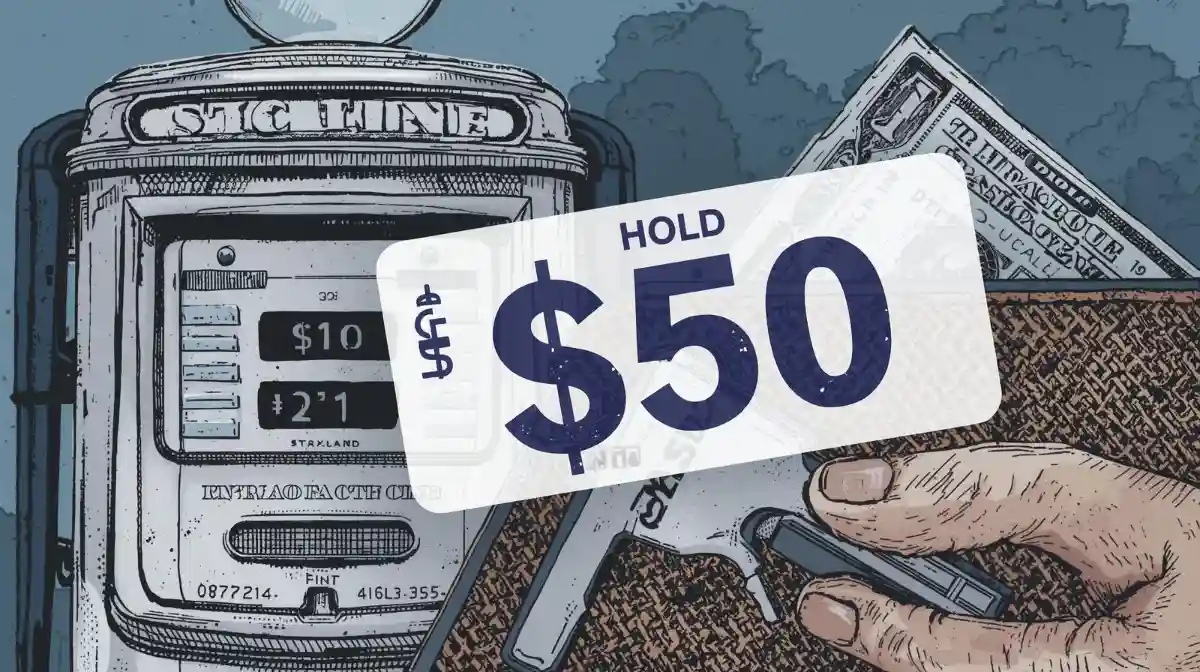
Let’s say you go to a gas station. You swipe your card at the pump. The gas station doesn’t know if you will fill up ₹500 or ₹4,000 worth of fuel.
- The Hold: To be safe, they might place a “hold” on your account for ₹5,000.
- The Result: Your Available Balance drops by ₹5,000 immediately, even though you haven’t pumped the gas yet. Your Current Balance might still show the money is there.
- The Trap: If you go buy lunch based on your Current Balance while that hold is active, you might overdraft your account because the “Available” money is already spoken for.
D. Check Deposits
If you deposit a check for ₹10,000 on Friday, your Current Balance might increase by ₹10,000 immediately to show the receipt. However, the bank might hold those funds for 2 days to ensure the check clears. Your Available Balance won’t change until the bank releases the hold.
III. How to Stop Getting Hit with Overdraft Fees
Now that you know the difference, here is your survival strategy to keep your account positive.
E. Turn Off “Overdraft Protection”
This sounds counter-intuitive, but “Overdraft Protection” is often just a fancy name for “Permission to Charge Fees.”
- The Fix: Call your bank or go into your app settings and opt-out of overdraft coverage for debit cards.
- What Happens: If you try to buy something and your Available Balance is too low, the card will simply be declined. Yes, it’s a moment of embarrassment at the register, but it saves you the ₹500 or ₹1,000 fee.
F. Keep a “Buffer” Fund
Don’t budget down to the last rupee.
- The Strategy: Keep a mental “zero” at ₹2,000 (or $100). If your account drops to ₹2,000, consider it empty. This small buffer absorbs those invisible “pending” holds that you forgot about, protecting you from accidental fees.
Conclusion
Banking apps are designed to be clean and simple, but sometimes that simplicity hides crucial details. The next time you open your app to check if you can afford a purchase, force your eye to look past the big number at the top. Find the smaller line that says “Available.” That is your true financial reality. By ignoring the Current Balance and respecting the Available Balance, you take control away from the bank’s fee algorithms and keep your hard-earned money where it belongs—in your pocket.
❓ Frequently Asked Questions (FAQ)
Q1. How long does a “Pending” transaction stay on my account?
A. Usually, pending transactions clear within 1 to 3 business days. However, for specific things like car rentals or hotel deposits, the hold can last for up to 7 days or more, blocking that money from your Available Balance even after you’ve paid the bill.
Q2. Can I spend money if my Current Balance is positive but Available Balance is negative?
A. No. If your Available Balance is negative (or zero), any purchase you make will either be declined or will trigger an overdraft fee. The fact that your Current Balance is positive doesn’t matter; that money is already promised to someone else.
Q3. Why did my Available Balance drop even though I didn’t buy anything?
A. This often happens with recurring subscriptions (like Netflix or Gym memberships). The merchant might have initiated the charge a day early to check if funds are there, placing a “hold” on the money before the actual due date.
Q4. Which balance does the ATM show?
A. Most ATMs will ask you which balance you want to see, or they will print both on the receipt. However, if it only shows one number, be careful—older ATMs might show the Current Balance, which can mislead you into withdrawing money you don’t actually have available.







3 thoughts on “Current Balance vs. Available Balance: Why Your App is Lying to You (And How to Avoid Fees)”