
Introduction: The “Loyalty” Trap
Let me ask you a question: If your mobile network has poor signal and high rates, what do you do? You port your number to Jio or Airtel, right? It takes 2 days, and you save money.
Now, look at your Personal Loan.
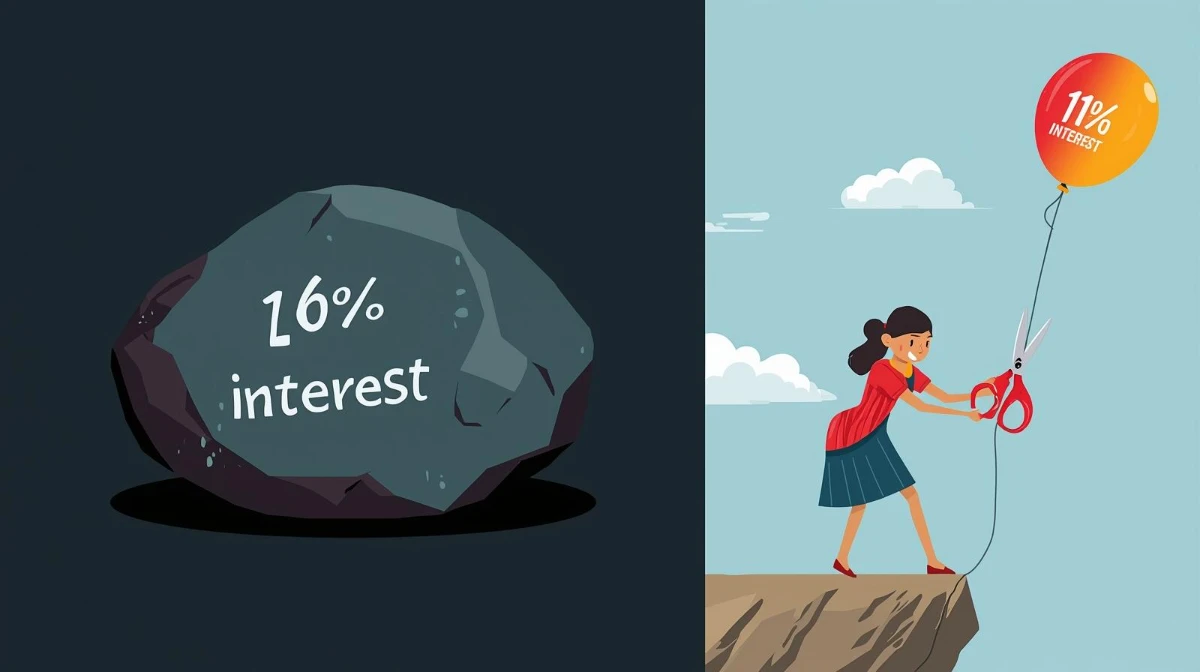
You probably took it 2 years ago during a medical emergency or a wedding. You were desperate, so you accepted whatever interest rate the bank gave you—maybe 14%, 16%, or even 18%.
Today, your salary has increased. Your CIBIL score is better (750+). Yet, you are still paying that expensive 16% interest to your old bank like a loyal customer.
Loyalty in banking is expensive.
Most people don’t know that they can “Port” their loan just like a SIM card. This process is called a Personal Loan Balance Transfer (PLBT). It allows you to shift your outstanding loan from Bank A (High Interest) to Bank B (Low Interest).
In this ultimate expert guide, we won’t just tell you what it is. We will do the math to see if it’s worth it, expose the “Foreclosure Charges” trap that banks hide, and give you a step-by-step roadmap to slash your EMI today.
I. What is Personal Loan Balance Transfer (PLBT)?
In simple terms, Bank B pays off your debt to Bank A completely. Now, you owe money only to Bank B, but at a lower interest rate.
Why do banks do this?
Bank B wants you as a customer. Since you have already paid EMIs to Bank A for a while, you are a “Proven Customer” with a repayment history. Bank B considers you low-risk, so they offer you a discounted rate (e.g., 10.5% or 11%) to steal you away from Bank A.
II. The Math: Does It Really Save Money? (The Calculator)
Let’s stop talking theory and look at hard numbers. This calculation is what you need to do before visiting any branch.
The Scenario:
- Original Loan: ₹10 Lakhs
- Current Outstanding Balance: ₹5 Lakhs
- Remaining Tenure: 36 Months (3 Years)
- Current Interest Rate (Bank A): 16%
The Battle: Staying vs. Switching
| Feature | Option 1: Stay with Bank A | Option 2: Switch to Bank B (PLBT) |
| Interest Rate | 16% | 11% (New Offer) |
| Remaining Principal | ₹5,00,000 | ₹5,00,000 |
| Tenure | 36 Months | 36 Months |
| Monthly EMI | ₹17,579 | ₹16,369 |
| Total Interest to Pay | ₹1,32,844 | ₹89,284 |
| Savings per Month | ₹0 | ₹1,210 |
| TOTAL SAVINGS | ₹0 | ₹43,560 |
The Result: By simply filling out a form and switching banks, you save ₹43,560. That is the cost of a new laptop or a family vacation, saved just by being smart.
III. The Hidden Trap: “Cost of Switching”
Wait! Don’t run to the bank yet. The calculation above is incomplete. AdSense advertisers won’t tell you this, but I will.
Switching isn’t free. There are two “Gatekeepers” that try to stop you:
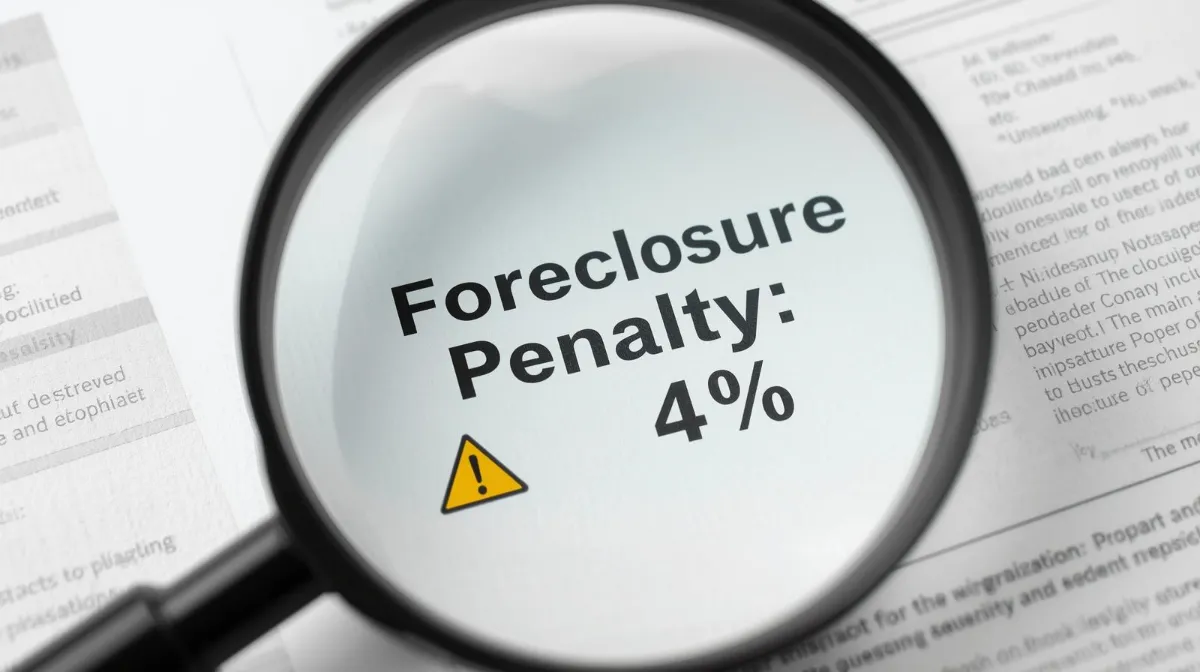
- Foreclosure Charge (Bank A): Your old bank hates losing you. They will charge a penalty to close the loan early. This is usually 2% to 4% of the outstanding principal + 18% GST.
- Processing Fee (Bank B): The new bank will charge a fee to process the new loan. This is usually 1% to 2% + GST.
The “Net Benefit” Formula (Expert Formula)
You should only switch if:
Total Interest Saved > (Foreclosure Charges + New Processing Fees)
Let’s apply this to our example above.
- Total Interest Saved: ₹43,560
- Cost to Switch:
- Foreclosure (4% of ₹5L): ₹20,000 + GST = ₹23,600
- New Processing (1% of ₹5L): ₹5,000 + GST = ₹5,900
- Total Cost: ₹29,500
- Net Profit: ₹43,560 (Savings) – ₹29,500 (Cost) = ₹14,060.
Verdict: In this case, you are still saving ₹14,000, so the switch is Profit.
However, if the interest difference was smaller (e.g., 16% to 14%), the costs might eat up all your savings. Always do this calculation first.
IV. When Should You NEVER Do a Balance Transfer?
As a financial expert, I advise against PLBT in these three situations:
- The “End of Tenure” Mistake: If you have only 6-12 months left on your loan, don’t switch. In the final years of a loan, your EMI is mostly Principal, not Interest. Switching now only incurs fees with zero benefit.
- The CIBIL Dip: If your CIBIL score has dropped below what it was when you took the first loan (e.g., due to a missed credit card payment), the new bank will either reject you or offer a higher rate.
- Job Change Instability: If you recently switched jobs and are on probation, the new bank might reject your application due to “unstable employment,” damaging your credit score further.
V. Step-by-Step Process: How to Execute the PLBT
This is the practical roadmap. This is what you will physically do.
Step 1: Request the “Foreclosure Letter”
Call customer care or visit your current bank (Bank A). Ask for a “Foreclosure Letter” or “Loan Outstanding Statement.”
- Note: This document is valid only for 15-30 days. It tells the exact amount needed to close the loan as of today.
Step 2: Apply with Bank B
Submit your PLBT application to the new bank. You will need:
- KYC Documents (PAN/Aadhaar)
- Last 3 months Salary Slips
- Last 6 months Bank Statements
- The Foreclosure Letter from Bank A
Step 3: The “Draft” Transfer
Once Bank B approves your loan, they will NOT give the money to you.
- They will issue a Demand Draft (DD) or make a direct NEFT transfer in favor of Bank A to clear your debt.
- If there is a “Top-Up” amount (extra cash you asked for), only that part comes to your account.
Step 4: Collect the NOC
Once Bank A receives the money, your old loan is closed. Crucial: You must collect the “No Dues Certificate” (NDC) or NOC from Bank A after 2 weeks. Without this paper, the loan might still show as “Active” in CIBIL, hurting you later.
VI. The “Top-Up” Loan Advantage
This is a secret feature of PLBT.
When you transfer your loan, Bank B often offers a Top-Up Loan.
- Example: You transfer a ₹5 Lakh balance, but Bank B gives you a loan of ₹8 Lakhs.
- ₹5 Lakhs goes to clear the old debt.
- ₹3 Lakhs comes to your bank account as extra cash.
Why is this good?
Top-up loans usually have the same low interest rate (11%) and a long tenure. It is much cheaper than taking a separate Personal Loan or using a Credit Card for new expenses.
VII. People Also Search For (FAQ)
Here are the specific questions users ask on Google, answered for your SEO benefit.
Q1. Is Personal Loan Balance Transfer good for CIBIL score?
A. Yes, in the long run. While the initial “hard enquiry” by the new bank might drop your score by 5-10 points temporarily, closing an old high-interest loan and paying the new one regularly improves your credit utilization ratio and boosts your score over time.
Q2. Can I transfer my Personal Loan from NBFC to a Bank?
A. Absolutely. This is the most common switch. NBFCs (like Bajaj Finance, Tata Capital) often charge higher rates (18-24%). If your credit profile improves, shifting to a Nationalized Bank (SBI, PNB) or Private Bank (HDFC, ICICI) can drastically reduce your rate to 11-13%.
Q3. What is the minimum outstanding amount required for transfer?
A. Most banks require a minimum outstanding balance of ₹50,000 to ₹1 Lakh to process a transfer. If you owe less than this, they won’t find it profitable to acquire you.
Q4. Does SBI charge foreclosure charges on takeover loans?
A. Public Sector Banks (like SBI) often have Zero Foreclosure Charges if you pay from your own sources, but rules vary for “Takeovers” (Balance Transfers). However, many private banks have started waiving foreclosure charges if you negotiate hard enough before transferring.
Conclusion: Don’t Be Lazy with Your Debt
A Personal Loan Balance Transfer is not just banking paperwork; it is a financial weapon. It is the difference between paying for the bank manager’s vacation or paying for your own.
If you have a loan above ₹3 Lakhs and your interest rate is above 14%, you are likely overpaying. Do the “Net Benefit” calculation today. Even if you don’t switch, calling your current bank and threatening to switch might make them lower your rate to keep you. Either way, you win.





2 thoughts on “Personal Loan Balance Transfer: How to Reduce Interest Rate from 16% to 11%”