

The gig economy—powered by freelancers, contractors, drivers, and consultants—offers flexibility, but when it comes to securing a personal loan, that same flexibility becomes a major hurdle.
Traditional lenders are structured for W-2 salaried employees, relying on fixed monthly pay slips. For gig workers, the income stream is often a volatile jigsaw puzzle, making lenders hesitant about the applicant’s ability to sustain repayment.
If your income swings wildly from a “feast” month to a “famine” month, you need a different strategy to prove your creditworthiness. You cannot rely on a single document; you must present a detailed, consistent narrative of your earning potential.
This comprehensive guide details the specific eligibility requirements and strategic steps gig workers with unpredictable income must take to secure a personal loan, focusing on how to showcase stability amidst variability.
I. The Lender’s Perspective: Why Variability is Risky
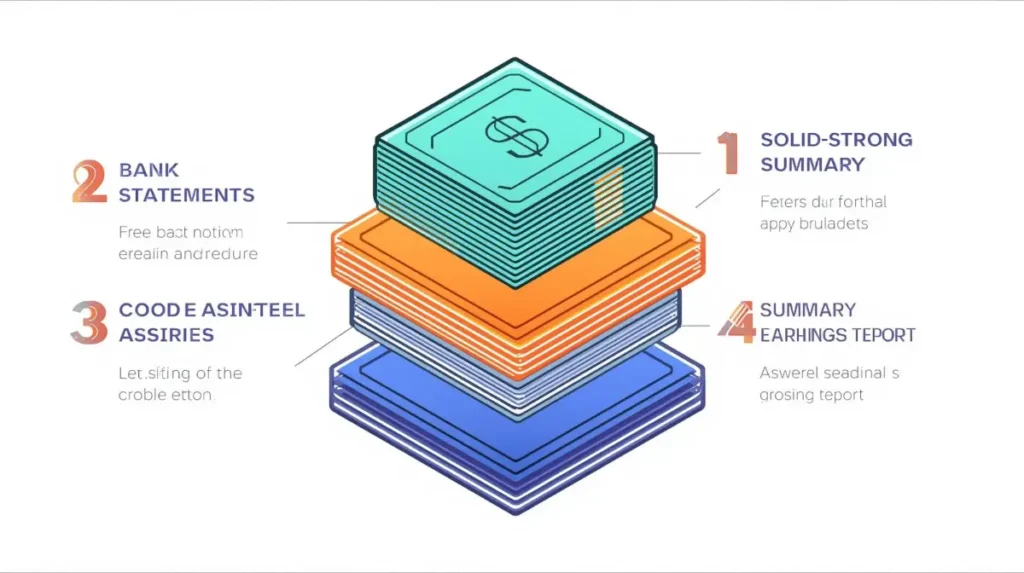
To overcome rejection, you must first understand how a traditional bank evaluates a variable income profile.
A. The Dueling Criteria: Stability vs. High Earning
- Stability First: Lenders prioritize predictable cash flow over a high annual total. A gig worker earning ₹15 lakhs per year but fluctuating wildly (₹50k one month, ₹3 lakhs the next) is often riskier to a bank than a salaried employee earning a steady ₹8 lakhs.
- The ‘Averaging’ Method: Most lenders will demand a minimum of 6 months, and often 12 to 24 months, of banking statements or tax returns (like Form 16A or 1099s) to calculate an Average Monthly Income (AMI). This AMI then becomes the basis for your loan eligibility.
B. The Essential Metric: Debt-to-Income (DTI) Ratio
For gig workers, the DTI ratio is calculated more conservatively by the bank.
- Bank’s Calculation: Lenders often only accept 70% to 80% of your gross income as eligible income for the DTI calculation to account for business expenses and variability.
- Target: Gig workers should aim for a personal DTI (including the proposed new loan payment) below 35% to offset the perceived risk of income volatility.
II. Phase 1: Strategic Documentation for Stability
Your documentation must focus on proving consistency over time, not just high peaks.
C. The Three-Pronged Proof of Income
Since you don’t have pay slips, you must provide layers of proof:
- Bank Statements (12 Months): Provide a full year of personal and, if applicable, business bank statements. Lenders will look for regular deposits from clients/platforms, not just high year-end totals.
- Tax Returns (2 Years): The most crucial document. Submitting two consecutive years of tax returns (showing rising or consistent income) proves long-term viability and shows the true net income after business expenses.
- Platform/Client Records: For platform workers (e.g., driving, delivery), provide official payment summaries directly from the platform (e.g., monthly earnings summaries from Uber, Upwork, Swiggy). This verifies the source of your earnings.
D. Separating Business and Personal Finances
This is non-negotiable for loan eligibility. Mixing business expenses (fuel, software costs) and personal expenses on the same bank statement makes it impossible for a lender to accurately determine your disposable income.
- Action: Ensure your bank statements clearly show regular, fixed transfers (a ‘salary’) from your business account into your personal account. This mimics the stability of a salaried job.
III. Phase 2: Choosing the Right Lender and Loan Type
Traditional banks may be too rigid. Focus on lenders that specialize in alternative underwriting.
E. Focus on Fintech Lenders and NBFCs
Non-Banking Financial Companies (NBFCs) and specialized Fintech lenders are often more flexible and adept at assessing gig economy risk.
- Algorithm Focus: These lenders use algorithms that heavily weigh current banking activity, cash flow patterns, and AI-driven predictions, rather than relying solely on the old W-2 model.
- Look for ‘Cash Flow Lending’: Some lenders specifically offer products based on business cash flow stability rather than personal income history alone.
F. Using Secured Loans and Co-signers
If unsecured personal loan rates are too high or eligibility is denied, use assets to lower the risk.
- Secured Loans: Use paid-off assets (Gold, Car Title, Fixed Deposits) as collateral. This dramatically increases your approval odds and lowers the interest rate, offsetting the risk associated with variable income.
- Co-signer: A co-signer with high, stable income and excellent credit history can mitigate the bank’s risk associated with your income variability. Be certain you can maintain repayments, as their credit is on the line.
IV. Phase 3: Application Strategy and Loan Management
Even with strong documentation, the application process requires careful planning.
G. The Timing and Loan Size Strategy
- Optimal Timing: Apply immediately after a sustained period of high or stable income (e.g., after 3-4 consecutive strong months). Never apply during or immediately following a low-income month.
- The ‘Safe’ Loan Size: Borrow only what your lowest expected income can comfortably support. Lenders will look at your lowest recorded monthly income in the past year when assessing risk.
H. Building Credibility with a Starter Product
If a large personal loan is out of reach, use a smaller financial product to build immediate credibility:
- Secured Credit Card: Obtain a secured credit card (you deposit collateral cash) and use it lightly and pay it off completely every month.
- Small Credit Builder Loan: Use a small, short-term loan specifically designed to build payment history, which demonstrates reliability before seeking a large unsecured loan.
Conclusion
The unpredictability of the gig economy is a challenge, but not a barrier, to securing a personal loan. Success depends on shifting the lender’s focus from your monthly fluctuation to your long-term average stability. By providing two years of comprehensive tax returns, separating your business and personal accounts, and proactively calculating a low DTI ratio, you create a compelling narrative of creditworthiness. Use your financial data as your powerful negotiating tool to demonstrate that your variable income is, in fact, a predictable and healthy pattern of profit.
READ MORE – How to Apply for an Education Loan Online — Step by Step Guide
❓ Frequently Asked Questions (FAQ)
Q1. How do lenders verify my income if I work for multiple platforms?
A. Lenders primarily rely on two things: your official tax returns (which consolidate all income sources) and direct access to your bank statements (via secure login integration). They will scrutinize the statements to look for consistent deposits from various gig sources over a 12 to 24-month period.
Q2. Is it better to apply for a personal loan as an individual or through my business?
A. For beginners, it is often easier to apply for a personal loan. Business loans for new or small operations are usually more complex, require stronger business credit history, and often demand higher collateral or guarantees. Applying personally allows the lender to assess your entire household income and assets.
Q3. Can I use my invoices as proof of income?
A. Invoices are helpful secondary evidence, but they are not enough on their own. Lenders prefer bank statements or tax returns because those documents prove that the invoices were actually paid and the money was received (cash flow), whereas an invoice only proves a bill was sent.
Q4. Should I wait until my income is more stable?
A. Yes. If you have just started working in the gig economy (less than 6 months), waiting until you have a full year of tax returns and bank statements showing consistent activity will significantly lower your interest rate and increase your approval odds.







5 thoughts on “The Gig Worker’s Edge: Personal Loan Eligibility with Unpredictable Income”